Camino de Santiago
Europe · France · Spain
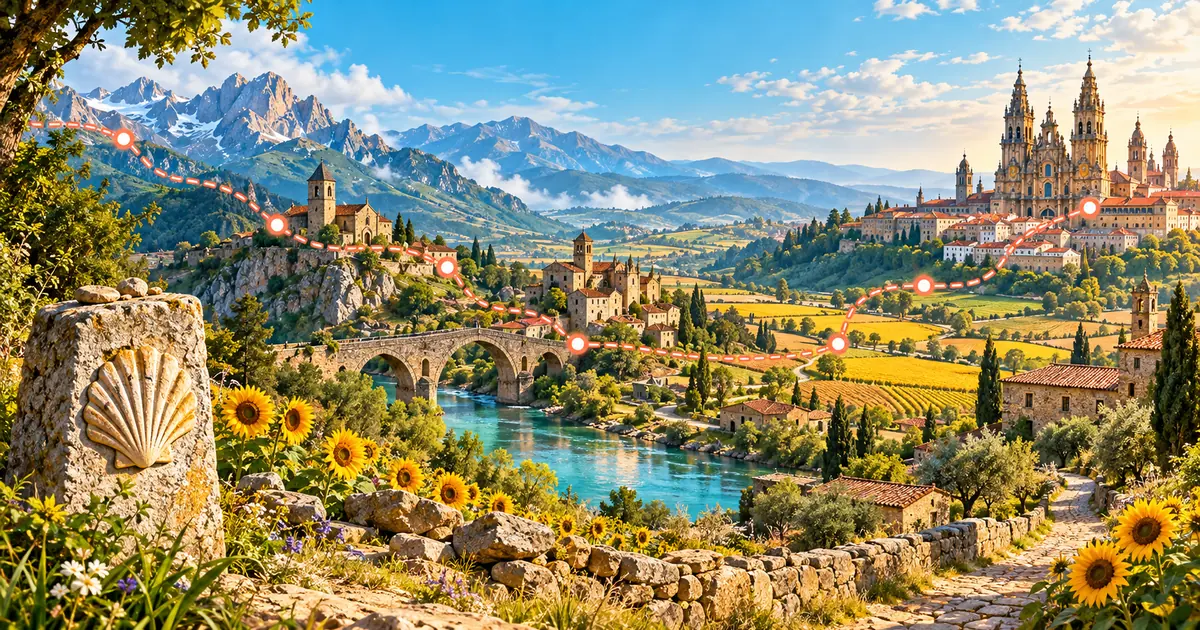
Walk a Camino-inspired route toward Santiago de Compostela. Pilgrim towns, cathedrals, and quiet roads. This is the exact 790 km itinerary currently available in the WalkQuest app, with 10 milestones in this order: Saint-Jean-Pied-de-Port → Pamplona → Logrono → Burgos → Fromista → Leon → Astorga → Ponferrada → Sarria → Santiago de Compostela. Saint-Jean-Pied-de-Port: A mountain village at the traditional Camino start. The town name means Saint John at the foot of the pass. Pamplona: Medieval streets and lively plazas. Pamplona is famous for the San Fermin festival. Logrono: A Rioja capital where the Camino crosses the Ebro beside old churches and lively tapas streets. Logrono is mentioned in the 12th-century Codex Calixtinus, an early guide to the Camino.
Burgos: A cathedral city with Gothic drama. Burgos Cathedral is a UNESCO World Heritage Site. Fromista: A compact Castilian stop of Romanesque stone, canal water, and open meseta landscapes. The Church of San Martin is one of the best-known Romanesque landmarks on the French Way. Leon: Stained glass, old walls, and pilgrim energy. Leon Cathedral is nicknamed the House of Light. Astorga: Roman heritage and Gaudi architecture meet where two historic pilgrimage routes cross. Gaudi designed Astorga Episcopal Palace in a distinctive neo-Gothic style. The journey finishes at Santiago de Compostela after 790 km.
Distances and milestone counts on this page are generated from the same route catalog used by the app, so the guide matches the experience users unlock. Camino de Santiago is a 790 km virtual walking journey across France, Spain. The itinerary connects Saint-Jean-Pied-de-Port, Pamplona, Logrono, Burgos, using real geography and documented heritage to turn daily movement into a clear long-term adventure. Saint-Jean-Pied-de-Port, Pamplona, Logrono are among the route's defining chapters. At 10,000 steps per day, the full distance is designed to take about 6 weeks, so progress grows through steady routines rather than one intense effort. Each milestone unlocks concise historical, cultural and landscape context, while digital stamps make the scale visible. Walk anywhere that is safe and convenient: Health Connect steps advance the virtual map even when the real-world route includes sea crossings, high mountains or long transfers.
Highlights
- ✓Explore Saint-Jean-Pied-de-Port, Pamplona through Santiago de Compostela
- ✓790 km · 6 weeks at 10,000 steps/day
- ✓Route: France, Spain
- ✓Landmarks: Saint-Jean-Pied-de-Port, Pamplona, Logrono
- ✓Cities and milestones: Logrono, Burgos, Fromista, Leon
- ✓Collectible stamps: 10
Cities and milestones
Saint-Jean-Pied-de-Port
France
A mountain village at the traditional Camino start. The town name means Saint John at the foot of the pass.
Pamplona
Spain
Medieval streets and lively plazas. Pamplona is famous for the San Fermin festival.
Logrono
Spain
A Rioja capital where the Camino crosses the Ebro beside old churches and lively tapas streets. Logrono is mentioned in the 12th-century Codex Calixtinus, an early guide to the Camino.
Burgos
Spain
A cathedral city with Gothic drama. Burgos Cathedral is a UNESCO World Heritage Site.
Fromista
Spain
A compact Castilian stop of Romanesque stone, canal water, and open meseta landscapes. The Church of San Martin is one of the best-known Romanesque landmarks on the French Way.
Leon
Spain
Stained glass, old walls, and pilgrim energy. Leon Cathedral is nicknamed the House of Light.
Astorga
Spain
Roman heritage and Gaudi architecture meet where two historic pilgrimage routes cross. Gaudi designed Astorga Episcopal Palace in a distinctive neo-Gothic style.
Ponferrada
Spain
A Bierzo valley city dominated by a many-towered Templar castle. The Castle of the Templars guards a historic crossing of the Sil River.
Sarria
Spain
A green Galician Camino town and the most popular starting point for the final walk to Santiago. Sarria lies just beyond the minimum 100-kilometre walking distance required for the Compostela certificate.
Santiago de Compostela
Spain
The classic finish at the cathedral square. Pilgrims have walked to Santiago for more than 1,000 years.
Landmarks
Saint-Jean-Pied-de-Port
A mountain village at the traditional Camino start. The town name means Saint John at the foot of the pass.
Pamplona
Medieval streets and lively plazas. Pamplona is famous for the San Fermin festival.
Logrono
A Rioja capital where the Camino crosses the Ebro beside old churches and lively tapas streets. Logrono is mentioned in the 12th-century Codex Calixtinus, an early guide to the Camino.
Burgos
A cathedral city with Gothic drama. Burgos Cathedral is a UNESCO World Heritage Site.
Fromista
A compact Castilian stop of Romanesque stone, canal water, and open meseta landscapes. The Church of San Martin is one of the best-known Romanesque landmarks on the French Way.
Leon
Stained glass, old walls, and pilgrim energy. Leon Cathedral is nicknamed the House of Light.
Fact sources
Hero image: AI-generated original artwork by OpenAI for WalkQuest.
Related routes
Open in WalkQuest
Explore Camino de Santiago, a 790 km virtual walking route with real cities, landmarks and collectible stamps. Start your WalkQuest journey today.